When to Use Elastomeric Coatings for Commercial Building Exteriors
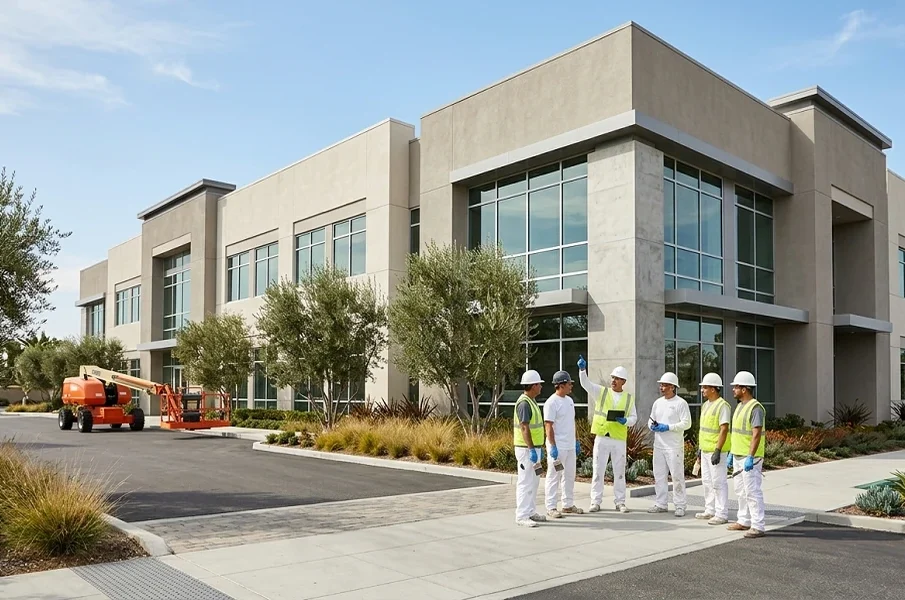
Commercial walls face constant exposure to sunlight, rain, wind, temperature shifts, and airborne dirt. Standard exterior paint can provide an attractive finish, but some buildings need a thicker and more flexible protective system.
Property managers may consider using elastomeric coatings for commercial building exteriors when walls have compatible masonry surfaces, recurring hairline cracks, or demanding weather exposure. The right decision depends on the substrate, existing finish, moisture conditions, and preparation requirements.
What Is an Elastomeric Wall Coating?
An elastomeric wall coating is a high-build exterior finish formulated to create a flexible membrane. Once cured, it can expand and contract as the underlying surface responds to changing temperatures.
This flexibility can help the coating bridge stable hairline cracks that ordinary paint may not cover as effectively. Its thicker film can also reduce wind-driven rain penetration when the product is properly selected and applied.
However, this type of finish is not a repair material for structural movement. Wide, deep, active, or recurring cracks may point to problems that require further investigation. Applying a heavy coating without addressing the underlying cause can conceal damage rather than correct it.
Surfaces That May Be Good Candidates
These coating systems are commonly considered for exterior stucco, concrete, concrete masonry units, and certain previously coated masonry walls. Large commercial façades with many small surface cracks may benefit from the seamless, flexible finish.
Before recommending a system, a painting contractor should identify the wall material and evaluate the condition of the existing coating. Poor adhesion, chalking, efflorescence, incompatible finishes, or trapped moisture can affect the new application.
Brick deserves special attention. Some brick assemblies need to release water vapor, and a coating that limits drying could contribute to deterioration. The National Park Service advises that when deteriorated brick must be coated, a water-permeable coating is generally preferable. Product compatibility should therefore be assessed for the specific wall rather than assumed.
Signs the Building May Benefit
A flexible wall coating may be worth considering when an exterior displays widespread but stable hairline cracking. It may also suit a porous surface exposed to frequent wind-driven rain, provided the wall is sound, and moisture can be managed correctly.
Other possible signs include premature failure of conventional exterior paint or repeated water entry through the wall surface. Yet water can also enter through roofs, windows, flashing, joints, parapets, and failed sealants. Coating the main wall will not correct leaks coming from those areas.
Moisture sources should be found and repaired first. The EPA’s moisture-control guidance stresses the importance of correcting leaks and seepage rather than merely treating visible symptoms. Although the guidance addresses homes, that core principle is also relevant when diagnosing commercial exteriors.
When Another Paint System May Be Better
A high-build flexible finish is not necessary for every property. Conventional premium exterior paint may be more appropriate when the surface is stable, properly sealed, and free from significant cracking or water exposure.
It may also be a poor choice when moisture is trapped inside the wall, the substrate is weak, or the existing coating cannot support the added film thickness. Historic masonry and unusual wall assemblies often require specialized evaluation.
The desired appearance matters as well. A heavy coating can soften fine architectural details or create a texture that differs from standard paint. Building owners should review sample areas before approving the full application.
Preparation Determines Performance
Even a suitable product can fail over a poorly prepared surface. Preparation may involve cleaning away dirt and biological growth, removing loose material, repairing cracks, treating joints, and testing the remaining finish for adhesion.
The wall must also be sufficiently dry. Contractors should follow the coating manufacturer’s requirements for primer, film thickness, application method, drying time, temperature, and weather conditions. These products often require a specific coverage rate to achieve their intended performance.
Access and operations require planning too. Lift placement, pedestrian protection, tenant entrances, delivery zones, overspray control, and curing time can all affect the work sequence.
Make the Decision Around the Building
When choosing the right paint for a commercial property, owners should weigh the substrate, exposure, moisture movement, crack condition, appearance, and expected maintenance needs together. Selecting a product solely because it is thicker can create avoidable problems.
A site-specific assessment can distinguish surface wear from active water intrusion or structural movement. It also helps define preparation, compatible materials, realistic scheduling, and appropriate test areas. This measured approach is important, according to Bay-Valley Painting, because coating performance begins with understanding the building rather than relying on a one-product solution.
Frequently Asked Questions
Can this coating repair structural cracks?
No. It may bridge certain stable hairline cracks, but structural or actively moving cracks require proper diagnosis and repair.
Can it be applied over existing paint?
Sometimes. The existing finish must be clean, firmly bonded, and compatible with the proposed system. Adhesion testing may be necessary.
Does a thicker coating automatically last longer?
No. Longevity depends on substrate condition, preparation, moisture management, correct film thickness, weather during application, and ongoing maintenance.
Plan the Exterior Around Long-Term Performance
The best exterior finish is one that matches the wall assembly and the building’s actual conditions. Bay-Valley Painting, Inc. can help commercial property owners assess their exterior surfaces and develop a practical coating plan. Visit the company’s website to explore the appropriate next step for your property.


Leave a reply








-
From Clicks to Careers: The Secret Role of Digital Marketing Recruiters in Brand Success
The digital landscape changes every single day. Businesses struggle to find the ... -
-
-
-